How Do the Characteristics of Mother and Father Influence a Child?
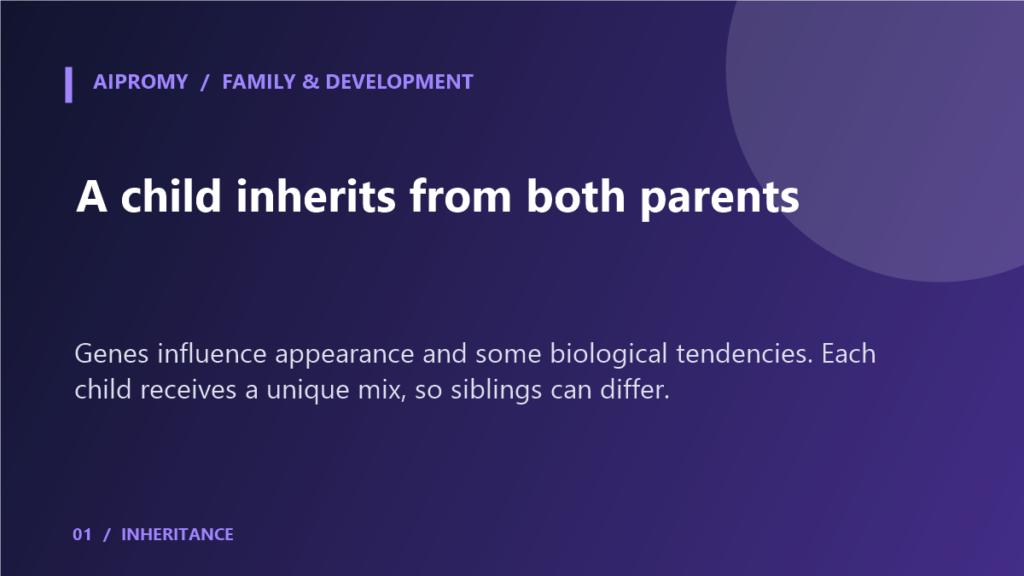
A child is shaped by a combination of inherited biology and the experiences of growing up. Children receive genetic material from both biological parents, which helps explain why siblings may share features such as eye color, hair texture, height tendencies, or aspects of temperament. But most personal characteristics do not come from one parent alone, and genes do not provide…
Explore the key ideas

Infographics
Select an infographic to zoom in and read its details.
What characteristics can children inherit?
Children receive a unique combination of genetic variants from their biological parents. This is one reason a child may resemble one parent in some ways and the other parent in different ways. Family traits can include visible features such as eye color, hair texture, skin tone, and tendencies related to height. Some health risks and biological characteristics also have genetic components.
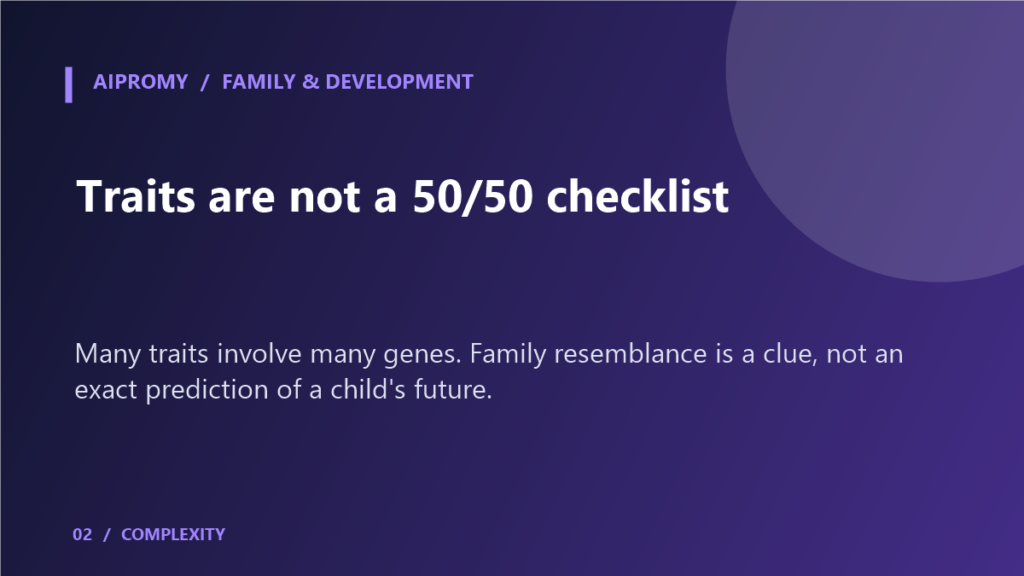
It is usually too simple to say that a particular feature comes only from the mother or only from the father. Many traits involve many genes, and the way those genes are expressed can vary. A child may carry a genetic variant without showing the same visible feature as a parent. For complex characteristics, researchers study patterns across groups; those patterns cannot tell exactly what one individual child will become.
It is also helpful to distinguish a family resemblance from a genetic rule. Relatives share genes, but they may also share language, routines, food, neighborhood, opportunities, and other parts of their environment. Similarities within a family can arise from several influences working together.
Is a child’s personality inherited from mother or father?
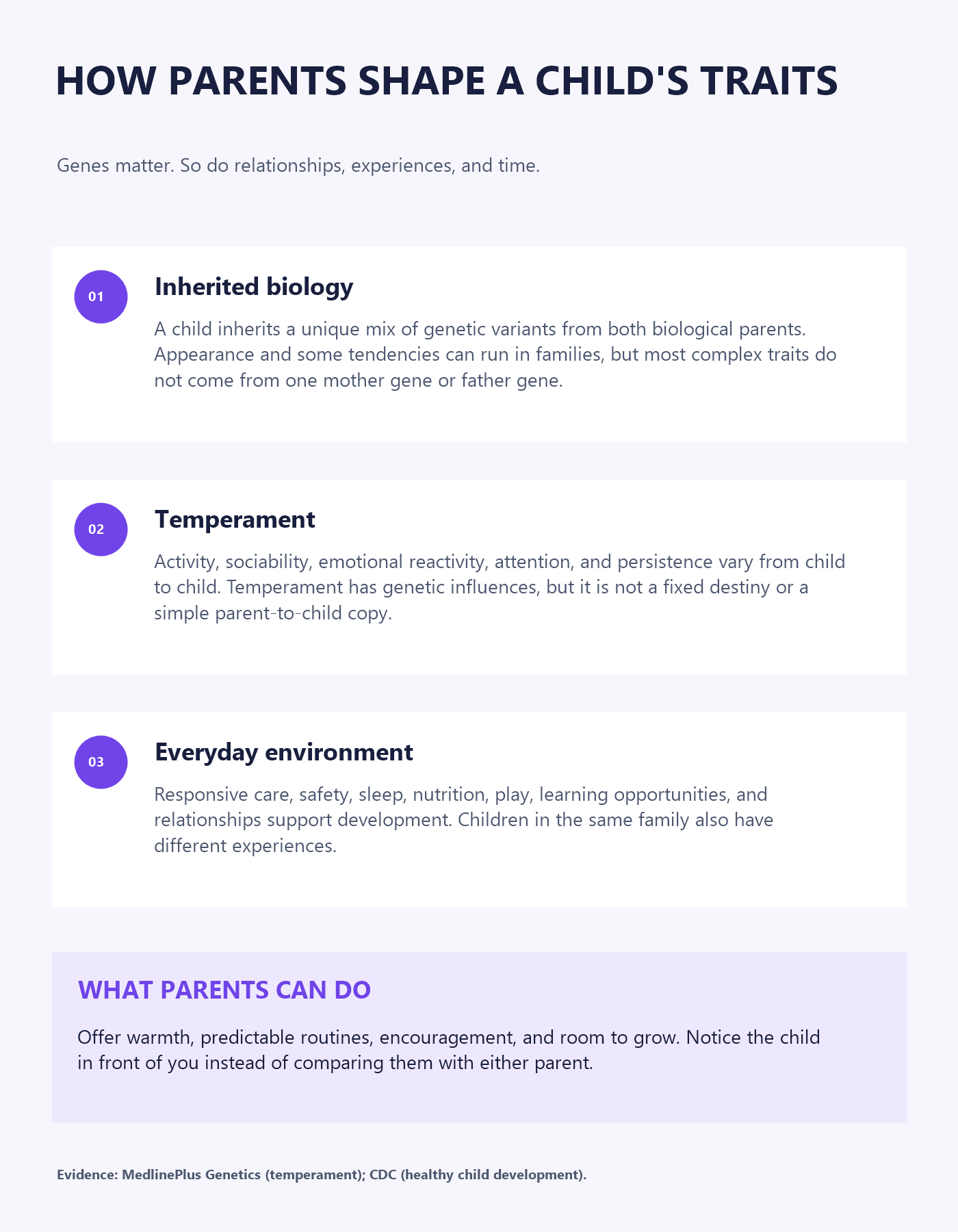
There is no reliable one-parent answer. Temperament describes early patterns in how a person tends to respond, such as activity level, sociability, attention, persistence, or emotional reactivity. Children sometimes show patterns that look familiar in their family, and research indicates that genetic differences contribute to temperament. However, temperament does not follow a simple inheritance chart, and there is no single “mother personality gene” or “father personality gene” that determines a child’s character.
A child may be cautious in a new setting, energetic during play, or quick to notice emotional changes. These tendencies are not automatically strengths or problems; their effects depend on the situation and the support around the child. A quiet child may be observant and thoughtful, while an active child may be curious and enthusiastic. The same quality can help in one setting and make another setting harder.
Temperament is also different from a fixed destiny. Children learn skills, build relationships, and encounter new experiences as they grow. Their ways of responding can become more flexible with practice and supportive guidance. Avoid labeling a child as “just like” one parent in a way that limits what you expect from them.
How do parenting and environment influence development?
Parents influence a child through both biology and the environment they help create. A calm, predictable home, responsive caregiving, and meaningful time together can support a child’s emotional and social development. Talking, reading, singing, playing, and listening help children practice language, attention, trust, and problem-solving. Healthy sleep, nutrition, movement, and access to learning also support everyday growth.
Support does not mean trying to shape every part of a child’s personality. It means noticing what helps that child feel safe enough to explore, learn, and recover from setbacks. A child who needs time to warm up may benefit from a preview of a new activity. A highly active child may do well with safe movement breaks and clear routines. These are examples of adjusting the environment to the child, not trying to erase their temperament.
Parenting is reciprocal, too. Children bring their own needs and reactions to relationships, and adults respond to them. When a child is upset, a steady adult response can help them learn ways to calm down and communicate. Over time, repeated interactions become part of a child’s experience of relationships and of their ability to manage emotions.
Why can siblings be so different?
Siblings do not inherit identical combinations of genetic variants, except in the special case of identical twins. They can also experience family life differently. Their ages, friends, teachers, health, interests, birth order, and one-to-one time with caregivers may not be the same. Even when children share a home, they can interpret events in different ways and respond with different temperaments.
This is why comparing siblings can be misleading. One child may be comfortable speaking in a group while another prefers to observe first. One may enjoy a busy schedule while another needs quiet time. These differences do not tell you which child is more capable, loving, or likely to succeed. They tell you that each child may need a different kind of support.
What can parents do to support their child?
- Observe before labeling. Notice what situations energize, worry, or calm your child. Look for patterns over time rather than judging one difficult day.
- Use warm, predictable responses. Clear expectations and consistent routines can help children know what comes next and what support is available.
- Encourage strengths without comparisons. Praise effort, curiosity, kindness, and practice. Avoid telling a child they must behave like a sibling or parent.
- Make room for individual needs. Some children want to try something right away; others benefit from preparation, reassurance, or a quieter start.
- Ask for help when concerned. If development, mood, learning, or behavior worries you, talk with a pediatrician or qualified child-development professional who can consider the child’s full context.
The most accurate answer to “How do the characteristics of mother and father influence a child?” is that both parents can contribute inherited traits, while relationships and experiences help shape how a child develops. Genes offer possibilities and tendencies, not a complete forecast. A child’s individual needs, supportive care, and opportunities to grow all matter.
Sources and further reading

Comments (0)